
The Biggest Risk Facing Women in AI Filmmaking Isn't AI. It's Invisibility.
By Lisa Russell, Regional Emmy-Winning Filmmaker, AI Artist and Founder of ArtsEnvoy.ai
June 25, 2026
I didn't come to AI because I was fascinated by the technology. I came because of women.
On International Women’s Day in 2023, I read a UN Women press release about gender bias in technology and AI. I had never used Midjourney, Runway, or any of the tools that would soon dominate headlines. But one idea stayed with me: if AI was going to shape the future, women deserved to be part of imagining that future.
So I made a film.
Using avatars, stock footage, and a collection of early AI tools, I created We the AI Women of the United Nations, imagining fictional AI women from around the world gathering at the United Nations to present a bold revision of the UN Charter. I made it in one day. It was hopeful, speculative, and unapologetically optimistic.

When I shared it with the filmmaking community, what surprised me wasn't the reaction to the story. It was the reaction to the technology. Some filmmakers were curious. Others were genuinely afraid. And almost immediately, every conversation drifted away from representation, away from gender bias, and toward the same exhausting debate:
should AI be in the creative process at all?
I don’t diminish the concerns of filmmakers around the ethics, the environmental and IP concerns of AI - those conversations matter. I believe every artist should decide that for themselves. But I started asking a different question.
With AI, the creative economy is exploding. More people than ever have the ability to make films, publish books, compose music, and create visual art. That should be good news. It means more stories, more perspectives, and more opportunities for women and historically underrepresented communities to shape culture.
Except — what happens when a film festival receives 150,000 submissions?
No jury has the time to watch every film. No curator can review every portfolio. No journalist can sift through millions of creators looking for the perfect voice to interview.
As the volume of creative work continues to grow, algorithms will increasingly help decide what gets surfaced and what gets overlooked.
In many ways, algorithms are becoming curators.
If they become the new gatekeepers, then bias doesn't disappear - it scales. And if AI reflects the inequalities already present in society, women risk becoming even more underrepresented in the creative industries unless we actively build systems that value visibility, attribution, and representation.
It's no longer just, Should I use AI in my creative process? It becomes, How do I ensure that my work, my voice, and my creative identity remain connected as AI reshapes the creative economy?
For women, that question feels especially important.
History is filled with women whose contributions were overlooked, whose ideas were credited to others, or whose names disappeared while their work endured. AI didn't create those inequities, but without thoughtful design it could amplify them.
That's why I've become increasingly interested in the idea of creator data sovereignty.
Creator data sovereignty means that artists should own and control the information that defines our creative lives—not only the work we produce, but the authorship, metadata, credits, context, and reputation attached to it. As AI systems become part of how creativity is discovered and recommended, those signals may become just as important as the work itself.
That realization changed the direction of my career. I didn't want to simply use AI—I wanted to help shape it. So I became not just an AI filmmaker, but a filmmaker-turned-founder.
Through ArtsEnvoy.ai and REPPED, I'm exploring what an AI artist manager could look like - one that helps creators own, organize, and activate their creative identity so they can thrive in an increasingly algorithmic world.
At its core is the idea of a Creative Intelligence Profile: a living representation of an artist's work, achievements, themes, credits, and goals. Rather than repeatedly filling out applications or rebuilding portfolios from scratch, creators can maintain a dynamic profile that powers the rest of the platform.
For too long, artists have focused on protecting our intellectual property. In the age of AI, we also have to protect our creative data.

From that foundation, REPPED can help creators discover opportunities, build stronger public profiles, generate press materials, and better communicate the story behind their work. My vision isn't to replace agents, managers, or publicists but to give every artist access to the kind of strategic support that has traditionally been available only to a fortunate few.
To me, the goal isn't to automate creativity. It's to automate the administrative burden that too often keeps artists from creating in the first place, while ensuring we remain visible, attributable, and connected to the work we've spent a lifetime building.
My hope for the next generation of women working at the intersection of art and AI is
that we won't be defined by the tools we use. I hope we'll be known for the futures we imagine, the systems we build, and the stories we refuse to let disappear. And I hope we create an ecosystem where technology doesn't diminish human creativity, but strengthens it - where women are not only using AI, but helping shape the values and infrastructure behind it.
Because if algorithms become the new curators, women cannot afford to become invisible to them.
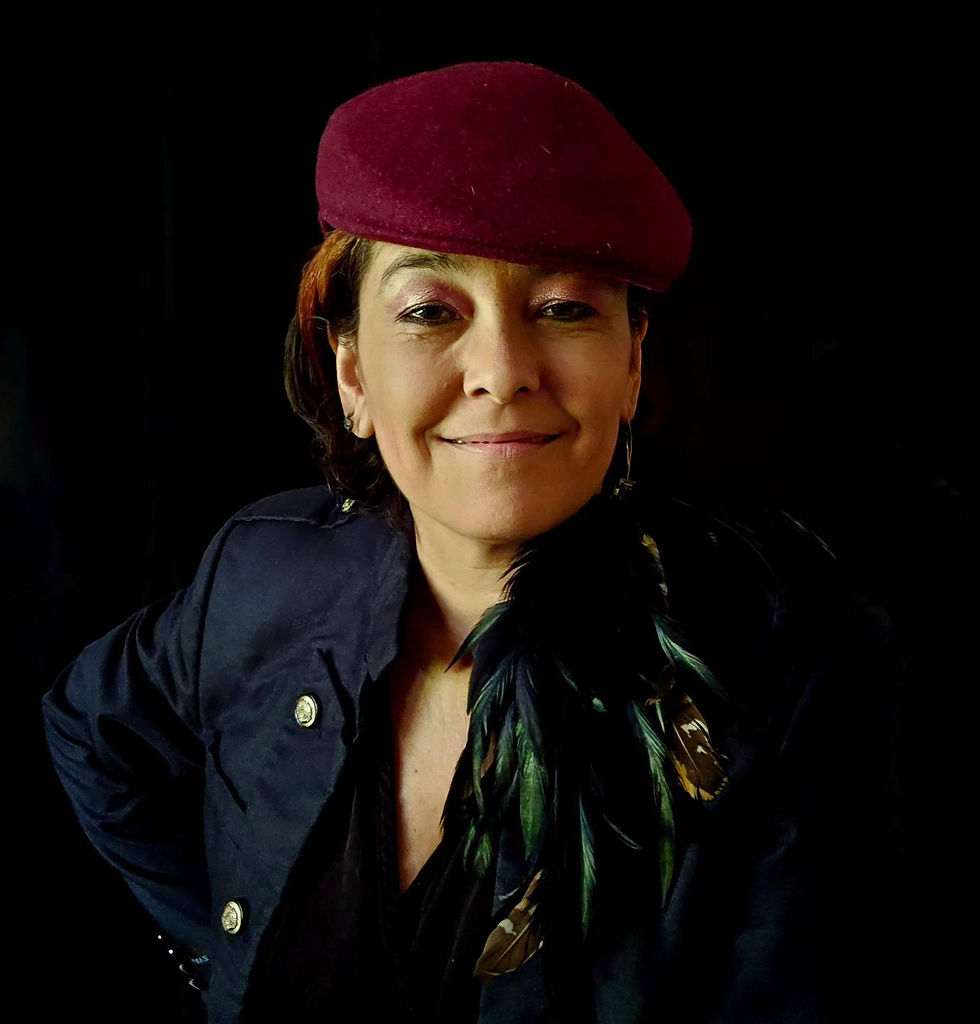
Lisa Russell is a Regional Emmy-winning filmmaker, AI artist, and founder of ArtsEnvoy.ai with more than 20 years of experience at the intersection of arts, social justice, and sustainable development. She is currently building REPPED, an AI Artist Manager for the creative economy designed to help creators own, organize, and activate their creative identity. Based in Mombasa, Kenya, she is a Women in AI Ambassador. Through her work with global organizations, including the United Nations, she explores creator data sovereignty, ethical AI, and the future of artist representation—advocating for a world where technology amplifies human creativity rather than replaces it.
CEO / Founder, ArtsEnvoy.ai
Ambassador, Women in AI Kenya
Email: lisa@artsenvoy.ai
Watch her TEDx Talk on "Shifting the Story"
Watch Africa's First AI-Generated Climate Change Music Video: "Moving On"